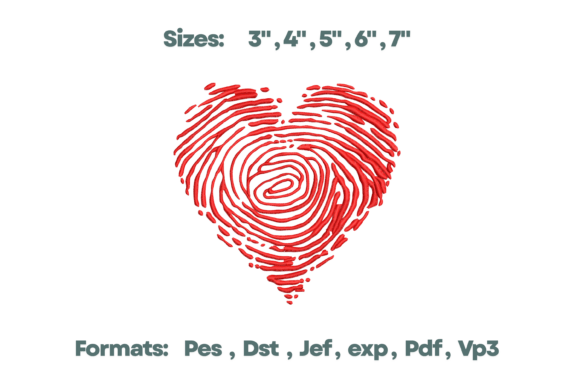
Fingerprint Heart Unique Embroidery Review
As a professional embroidery designer who has spent years translating digital concepts into tangible thread on fabric, I approach every new machine embroidery design with a critical eye. The goal is never just to create something pretty; it is to solve a branding problem for small business owners, apparel decorators, and merch creators. Recently, I evaluated the Fingerprint Heart Unique Embroidery design, marketed as a sophisticated pattern that moves away from standard icons to offer a symbolic signature. In an industry saturated with generic hearts and clip-art, this design promises a unique angle for Valentine S Day collections and year-round branded merchandise.
First Impressions: Beyond the Standard Icon
The initial review of the Fingerprint Heart Unique Embroidery reveals a concept that balances organic texture with geometric precision. Unlike the smooth curves of a traditional heart, this design incorporates the ridges and whorls of a fingerprint, creating a visual metaphor for individuality and human connection. For a boutique owner or an Etsy seller looking to elevate their brand identity, this design feels less like a decoration and more like a seal of authenticity. It exudes a handmade product quality even when executed by a commercial machine, suggesting that the item was crafted with personal care.
The sophistication described in the product details is evident in the line work. It avoids the clutter often found in overly detailed patterns, focusing instead on the flow of the lines to form the heart shape. This makes it an excellent candidate for custom apparel where subtlety is key. Whether applied to a staff uniform or a high-end tote bag, the design communicates professionalism without shouting for attention. It is bold enough to stand out on a dark background but refined enough to complement a minimalist aesthetic.
Real-World Applications for Small Business Merch
When considering how Fingerprint Heart Unique Embroidery performs in actual production environments, its versatility becomes apparent. For a local café or bakery, this design works beautifully as a chest logo accent on aprons. The intricate detail of the fingerprint adds a layer of personality that distinguishes the staff from competitors using standard logos. Similarly, for a creative studio or florist, applying this design to a tote bag design creates a memorable customer gift that reinforces the brand's commitment to uniqueness.
I have also tested the concept for cap embroidery. Placing the Fingerprint Heart on the front panel of a flat-brim cap offers a striking focal point. Because the design is self-contained within the heart shape, it does not require accompanying text to make sense, which is crucial for caps where space is limited. Furthermore, for brands producing embroidered patches, this pattern provides a textured look that mimics a wax seal or a stamp, adding perceived value to the finished product. When used on denim jackets or backpacks, it serves as a conversation starter, enhancing buyer engagement and brand recognition.
In the realm of event merch and holiday promotions, particularly around Valentine S Day, this design allows businesses to offer something distinct. Instead of mass-produced red hearts, a small business merch line featuring the Fingerprint Heart suggests a deeper emotional connection. It transforms a simple promotional item into a keepsake, encouraging customers to keep and reuse the item, thereby extending the lifespan of the marketing message.
Critical Considerations for Production Success
While the aesthetic potential is high, experienced decorators know that complex designs require careful execution. The Fingerprint Heart Unique Embroidery features fine lines and varying stitch directions to mimic fingerprint ridges. This means stitch density must be managed carefully. If the density is too high, the design may become stiff or pucker the fabric, especially on lightweight materials like cotton tees or silk scarves. Conversely, if the density is too low, the delicate lines may break, losing the integrity of the fingerprint effect.
One area requiring caution is the use of this design on curved surfaces or very small patch sizes. The intricate details that define the fingerprint can get lost if the design is scaled down below 2 inches. For cap embroidery or sleeve details, ensure the hoop size allows for adequate tension control. Additionally, when working with textured fabric such as fleece or heavy canvas, the ridges of the material can interfere with the fine threads, potentially causing skipped stitches. Always test the design on a scrap piece of the actual fabric before committing to a full run.
Color selection is another critical factor. While black and white offers the highest contrast and clearest definition of the fingerprint lines, using multiple thread colors can enhance the depth of the design. However, avoid using too many color changes in a single small area, as this can increase production time and cost for your clients. A monochromatic scheme or a two-tone gradient often yields the most premium look for this specific pattern.
Strategic Branding and Commercial Viability
Integrating Fingerprint Heart Unique Embroidery into a brand strategy goes beyond aesthetics; it impacts customer trust and perception. In a market where consumers crave authenticity, a design that symbolizes a "signature" or a "personal touch" aligns perfectly with the values of handmade brands and artisanal businesses. It signals that the company cares about the individual customer, fostering a stronger emotional bond.
For digital embroidery file buyers and product designers, this asset serves as a powerful tool for differentiation. When compared beside other generic design assets, the Fingerprint Heart stands out as a unique identifier. It helps establish visual consistency across various product lines, from packaging accents to employee uniforms. By using a consistent, recognizable motif, businesses can build a cohesive brand identity that resonates with their target audience.
However, before launching a commercial project, it is imperative to confirm the licensing terms. Ensure you have the rights to use the digital embroidery file for commercial purposes, including the creation of physical goods for sale. Some licenses restrict the number of items produced or prohibit resale of the design itself. Always verify these details to protect your business from legal complications.
Practical Designer Notes for Implementation
To ensure the best results with Fingerprint Heart Unique Embroidery, follow these practical steps:
- Test in Black and White First: Start with a single-color run to check the flow of the lines and the clarity of the fingerprint details before introducing complex color schemes.
- Verify Scalability: Check if the design retains its detail at the intended size, particularly for small patches or buttonhole applications.
- Select the Right Stabilizer: Given the fine details, use a cutaway stabilizer for stretchy fabrics or a tear-away for stable wovens to prevent puckering and maintain sharp edges.
- Create a Printable Mockup: Before stitching, generate a printable mockup for client approval to visualize how the design sits on the garment or patch.
- Inspect Spacing and Density: Review the digitization to ensure there is enough spacing between the fingerprint ridges to prevent thread buildup.
- Confirm Hoop Size: Ensure the design fits comfortably within your machine's hoop to avoid distortion during stitching.
By adhering to these guidelines, you can leverage the unique appeal of the Fingerprint Heart Unique Embroidery to create high-quality, professional merchandise that stands out in a crowded marketplace. Whether for a seasonal promotion or a permanent brand element, this design offers a sophisticated way to leave a lasting impression.